

How Much Water Do Young Athletes Need?
USA Cheer has partnered with TrueSport, to provide new educational tools to equip coaches, parents and young athletes with the resources to build life skills and core values for success in sports and in life. TrueSport, a movement by the U.S. Anti-Doping Agency, inspires athletes, coaches, parents, and administrators to change the culture of youth sport through active engagement and thoughtful curriculum based on cornerstone lessons of sportsmanship, character-building, and clean and healthy performance, while also creating leaders across communities through sport.


TrueSport Expert Stephanie Miezin, MS, RD, CSSD
Helping young athletes stay hydrated is one of the simplest ways to support their health, safety, and performance. Water plays a key role in everything from focus and mood to muscle function and body temperature. When kids are active, their bodies rely on sweating to cool down, and that means they need to replace lost fluids regularly, especially in heat and/or altitude.
Here, registered dietitian and TrueSport Expert, Stephanie Miezin, MS, RD, CSSD, explains how to best determine your athlete’s daily fluid needs depending on their environment, activity, and fluid preferences.
Start with Daily Needs
Every young athlete needs a certain amount of fluids each day, even before you factor in sports or exercise. General daily guidelines include:
- Ages 4–8: About 56 ounces (7 cups)
- Ages 9–13: About 72–80 ounces (9–10 cups)
- Ages 14–18: About 72–112 ounces (9–14 cups)
Water should make up most of this intake, but other drinks like milk, sports drinks, juice, smoothies, and soups also contribute to hydration. The goal is steady hydration throughout the day—not just downing fluids right before practice or a competition.
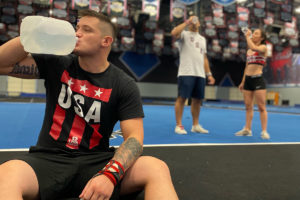 Add Fluids for Activity
Exercise increases fluid needs, especially during long practices, games, or hot weather. Athletes need to replace what they lose through sweat.
Sweat rates vary widely, but general estimates are good to know:
- Younger athletes may lose about 11–25 ounces per hour
- Teen athletes may lose significantly more, sometimes up to 90 ounces per hour in intense or hot conditions
Because every athlete is different, encourage kids to start with small, regular sips during activity and adjust based on how they feel and how much they sweat.
For older athletes, sweat loss can be estimated by weighing before and after exercise, but for younger athletes, this should be done carefully—if at all—to avoid creating an unhealthy focus on body weight.
For more information on calculating sweat rates, visit the hydration section of the Nutrition Guide.
Avoid Over- or Under-Hydrating
The goal is to replace fluids lost—not exceed them. Drinking too little can lead to dehydration, while drinking too much may cause discomfort like a feeling of heaviness or ‘sloshing’ in the gut.
Hydration matters most during:
- Long or intense activities (like tournaments or endurance events)
- Hot or humid environments
- High altitude conditions
Simple Ways to Check Hydration
You do not need complicated tools to monitor hydration. Two easy indicators work well:
- Urine color: Pale yellow (like lemonade) usually means well hydrated; darker yellow (like apple juice) can signal dehydration
- Thirst: If a child feels thirsty, they may already be slightly dehydrated
Most importantly, encourage athletes to drink regularly throughout the day rather than waiting until they feel thirsty.
Make Hydration Easy
Parents and coaches can help build good habits by making hydration simple and accessible:
- Encourage athletes to carry a reusable water bottle.
- Build in water breaks during practices and games.
- Remind kids to drink before, during, and after activity.
- Model good hydration habits as adults.
Takeaway
With consistent habits and a little planning, young athletes can stay well hydrated and ready to perform their best. A young athlete can support their daily health and performance by drinking fluids (mainly water) that match their baseline fluid needs, plus replacing fluids lost in sweat. Monitor hydration by having a young athlete check in on urine color and be aware of when they get thirsty.
What is TrueSport?

The TrueSport Champion Network is a community of coaches, parents, program directors, and athletes who believe in the power of youth sport to build life skills and core values for success both on and off the field. Join TrueSport Champion Network to help promote the positive values of cheer, dance, and STUNT!
The TrueSport Coaching Education Program empowers coaches—the most significant influencers in young athletes’ lives—with a transformative learning opportunity to obtain the knowledge and resources to cultivate, champion, and uphold the rich promise and highest potential of sport.

Additional Training Modules from TrueSport
USA Cheer is proud to partner with USADA’s TrueSport® to bring relevant educational content to the Cheer and STUNT community in order to promote a positive youth sport experience. We are excited to provide access to TrueSport’s experts that take coaching beyond skills and help truly develop the overall athlete by building life skills and core values for success on and off the mat, sideline, field, and court.
Feel free to share these resources with your coaching staff, parents, or athletes!
About TrueSport
TrueSport®, a movement powered by the experience and values of the U.S. Anti-Doping Agency, champions the positive values and life lessons learned through youth sport. TrueSport inspires athletes, coaches, parents, and administrators to change the culture of youth sport through active engagement and thoughtful curriculum based on cornerstone lessons of sportsmanship, character-building, and clean and healthy performance, while also creating leaders across communities through sport.
For more expert-driven articles and materials, visit TrueSport’s comprehensive library of resources.
This content was reproduced in partnership with TrueSport. Any content copied or reproduced without TrueSport and the U.S. Anti-Doping Agency’s express written permission would be in violation of our copyright, and subject to legal recourse. To learn more or request permission to reproduce content, click here.